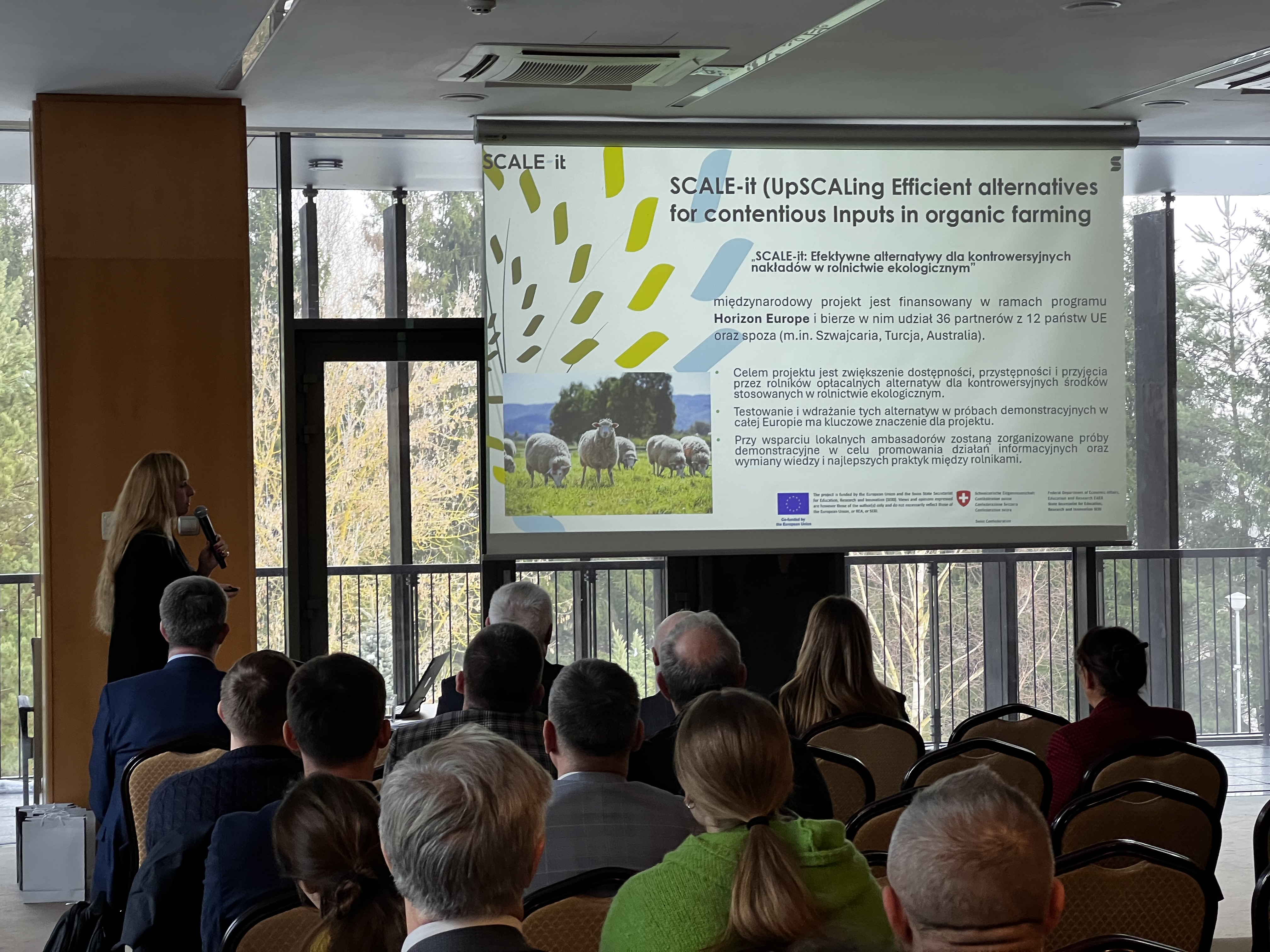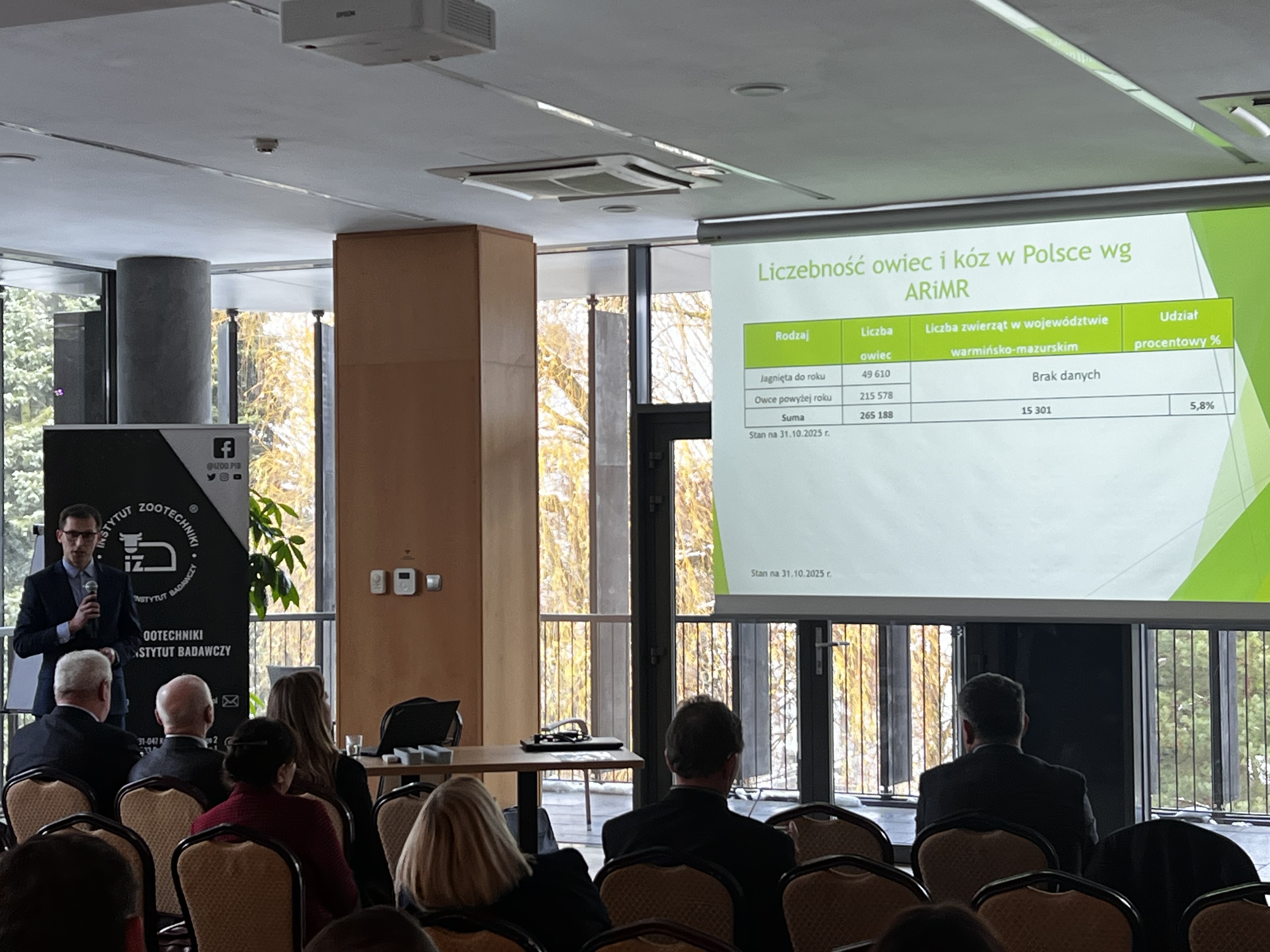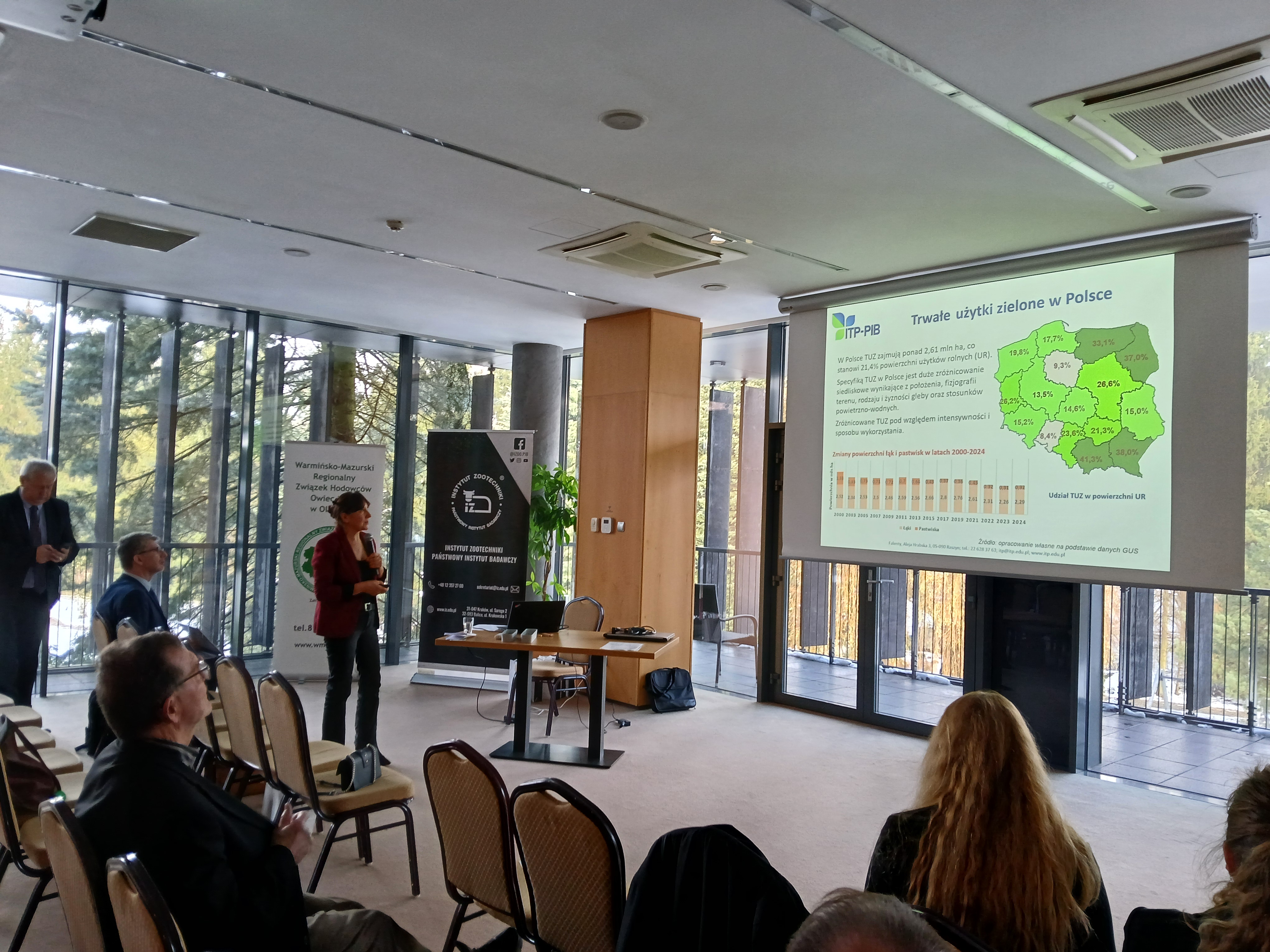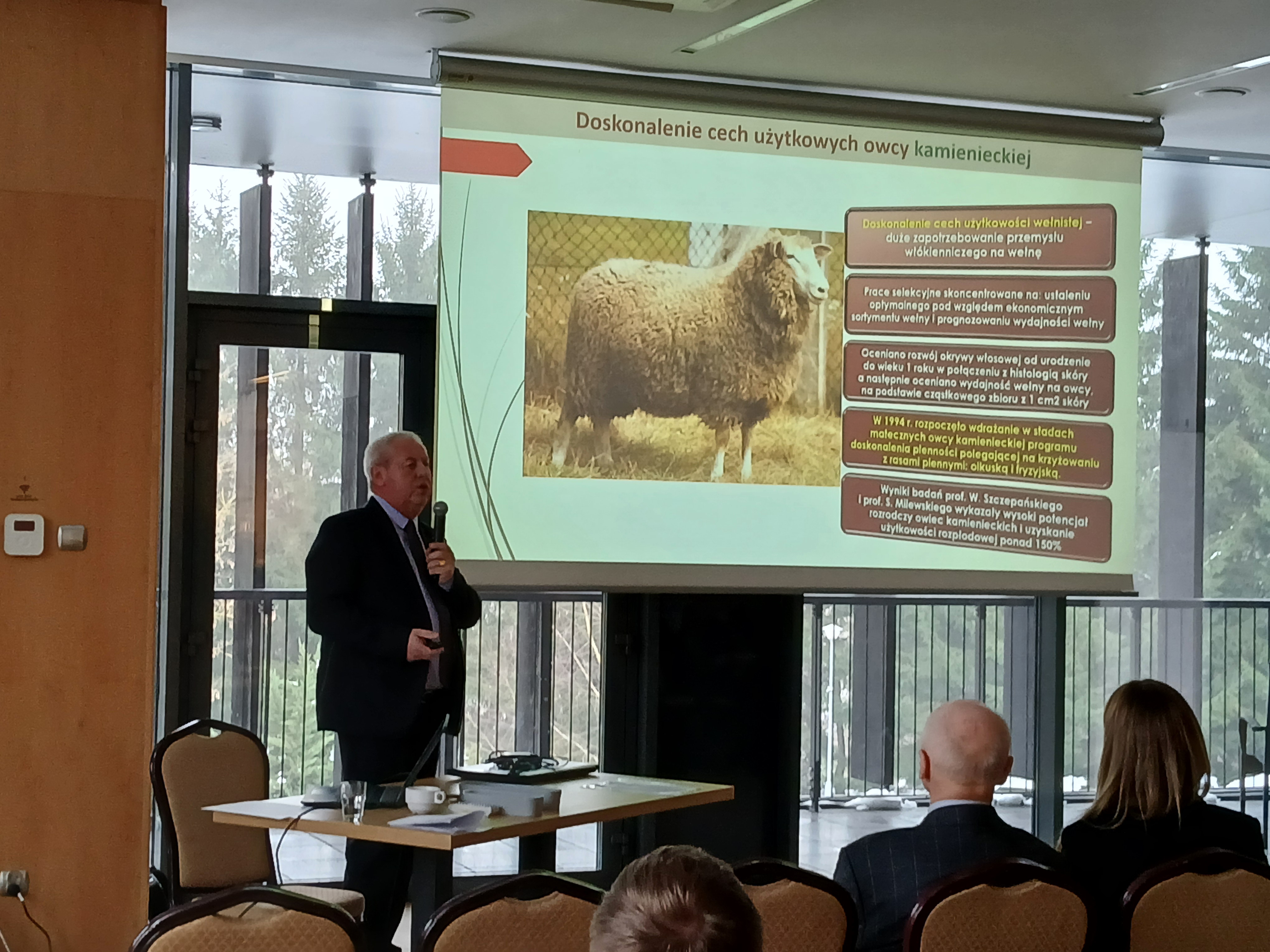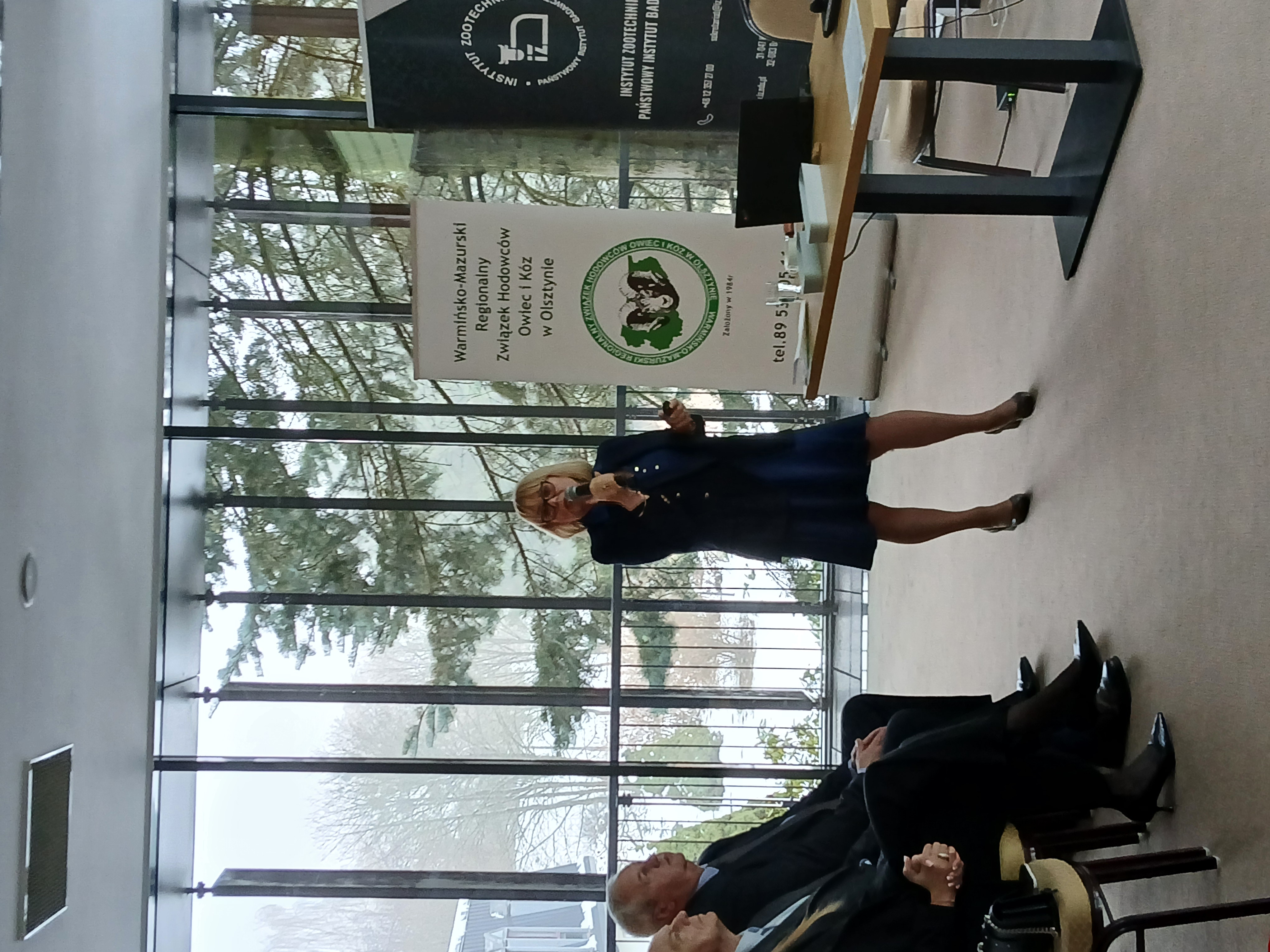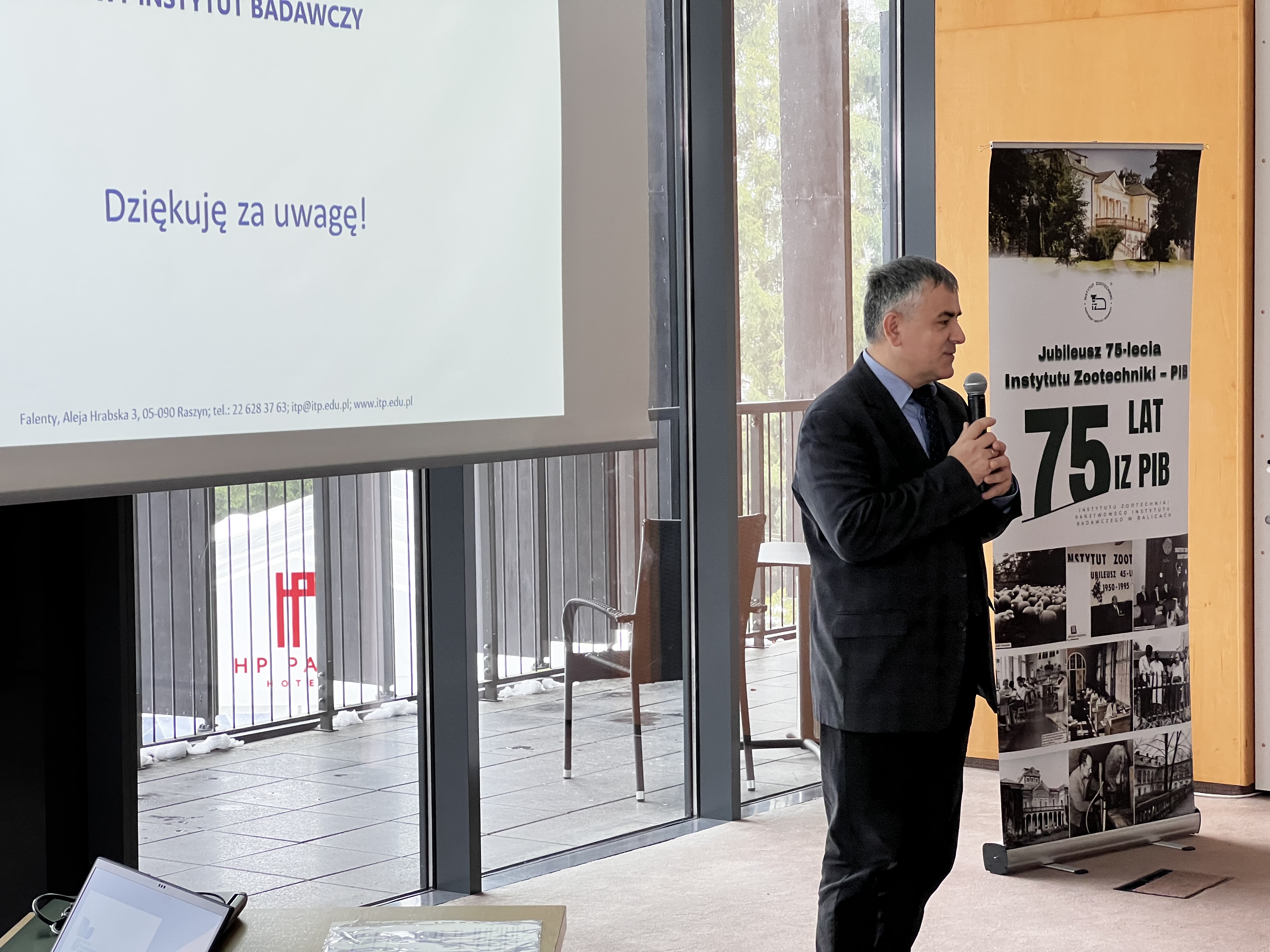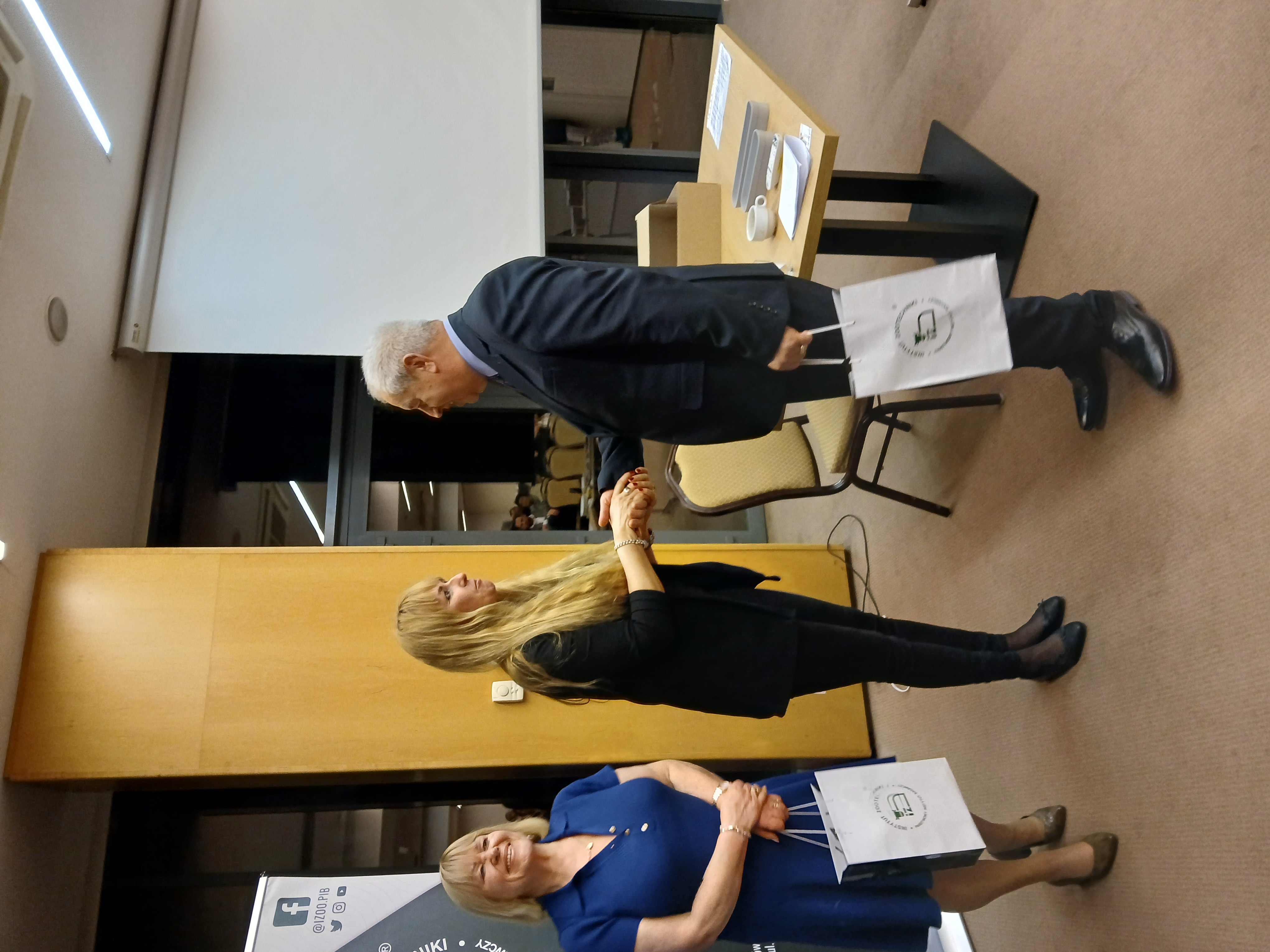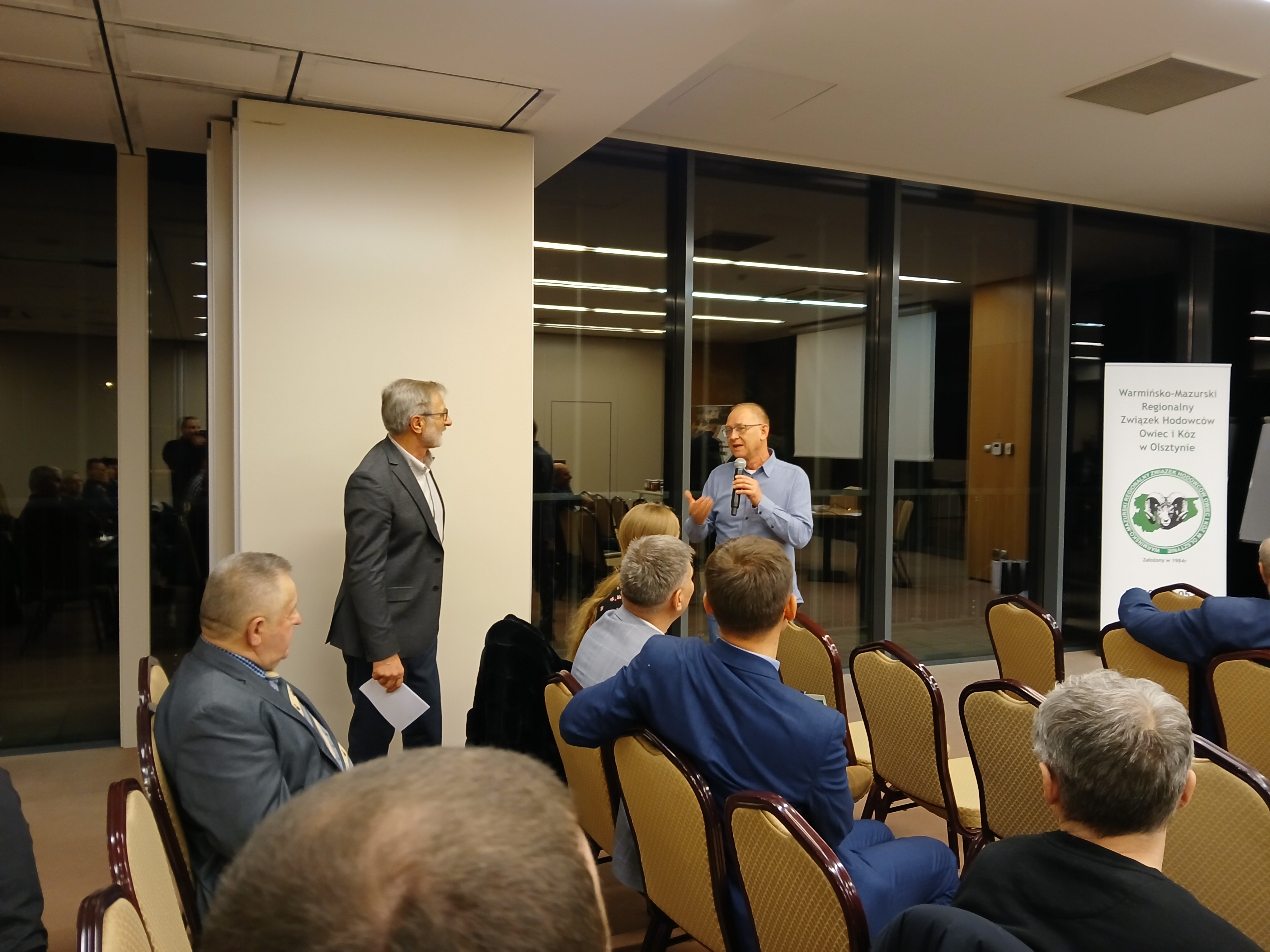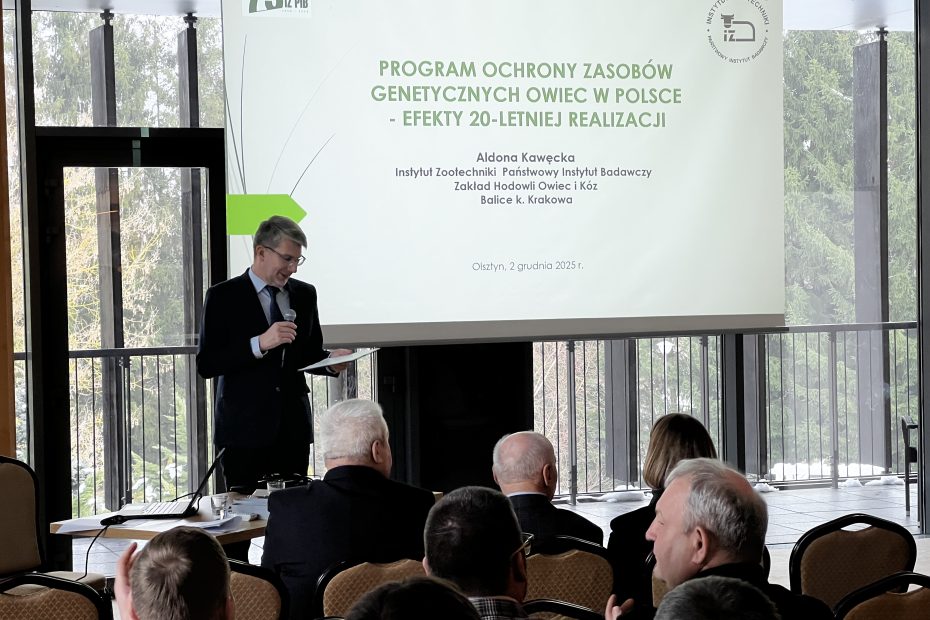
On 2 December 2025, a scientific conference entitled “Current problems in sheep farming with particular emphasis on lamb production and pasture management” was held in the conference room of the HP Park Hotel in Olsztyn.
The conference was organized by the Department of Sheep and Goat Breeding of the National Research Institute of Animal Production and attracted over seventy participants.
The event was attended by sheep breeders from various regions of the country, representatives of the Polish Sheep Breeders’ Association and Regional Sheep and Goat Breeding Associations, representatives of Experimental Stations and companies of the National Research Institute of Animal Production in Kołbacz and Kołuda Wielka, representatives of Agricultural Advisory Centres, as well as employees and students of the University of Warmia and Mazury.
The conference was opened by the Deputy Director for Science at the National Research Institute of Animal Production, Prof. Sylwester Świątkiewicz, PhD, who emphasized the importance of the genetic resources conservation programme in modern sheep farming, as well as the need for dialogue between the administrative, scientific, and breeding communities.
The first speaker was Aldona Kawęcka, PhD, Prof. of NRIAP, head of the Department of Sheep and Goat Breeding at the National Research Institute of Animal Production in Balice and coordinator for the conservation of sheep and goat genetic resources. She presented the results of twenty years of implementation of the national programme for the protection of native breeds, discussing the key elements of scientific and administrative work related to its implementation, as well as future directions for the programme’s development.
Next to speak were:
- Piotr Jastrzębowski, director of the office of the Warmian-Masurian Regional Association of Sheep and Goat Breeders, who discussed in detail the state of sheep breeding in the Warmian-Masurian Voivodeship. He presented current data and identified key problems and challenges faced by local breeders.
- Barbara Wróbel, PhD, professor at the Institute of Technology and Natural Sciences, who presented the benefits of rational and sustainable use of grasslands as an economically effective feed base for sheep. She discussed the changes that have taken place in meadows and pastures over the last twenty years and indicated the optimal times and methods for pasture renovation.
- Jacek Chmielewski, representative of the Direct Payments Department of the Ministry of Agriculture and Rural Development, who discussed the prospects for sheep payments and the possibilities of supporting sheep farming under the Common Agricultural Policy.
- Prof. Jan Miciński, PhD, head of the Department of Sheep and Goat Breeding at the University of Warmia and Mazury, who presented the characteristics of the Kamieniecka sheep breed in comparison with other native breeds, focusing on the efficiency of lamb production and the high quality of the meat obtained.
- Jolanta Wachowska, director of the Regional Sheep and Goat Breeding Association in Malbork, who discussed issues related to the performance and breeding potential of Pomeranian sheep. She presented the state of the population over two decades and drew attention to the challenges facing this breed. She also touched upon the ever-relevant issues related to the profitability of slaughter lamb production, the organization of sheep purchasing and export.
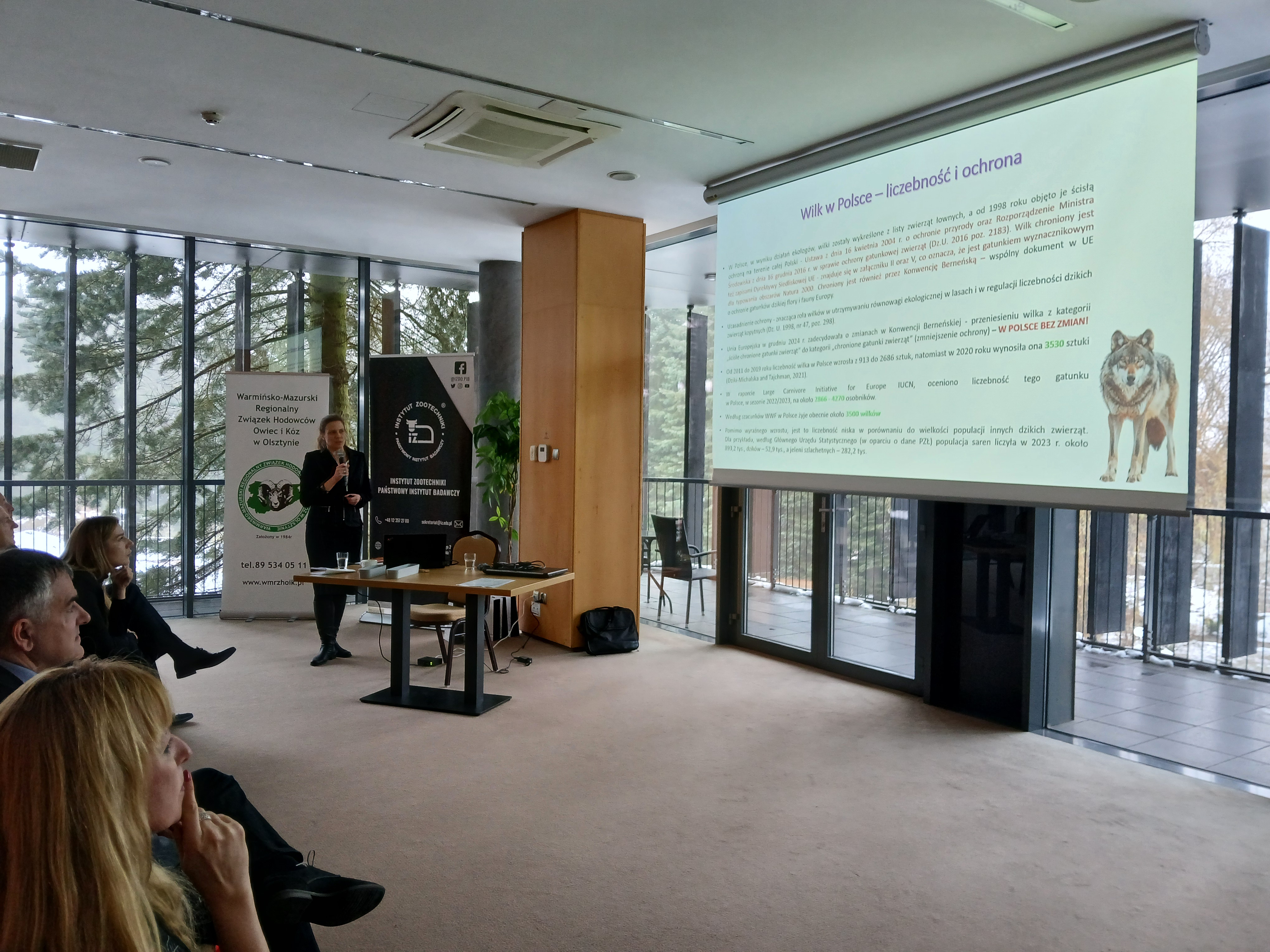
- Marta Pasternak-Chorosz, PhD Eng., representing the Department of Sheep and Goat Breeding of the National Research Institute of Animal Production in Balice, who presented a detailed analysis of the problem of wolf attacks on native breeds based on administrative reports. She discussed both economic losses and threats, as well as methods of protecting flocks. She also pointed to the growing conflict between human expansion into areas of wild fauna and the increase in the population of predators, and drew attention to the problem of stray dogs attacking sheep flocks.
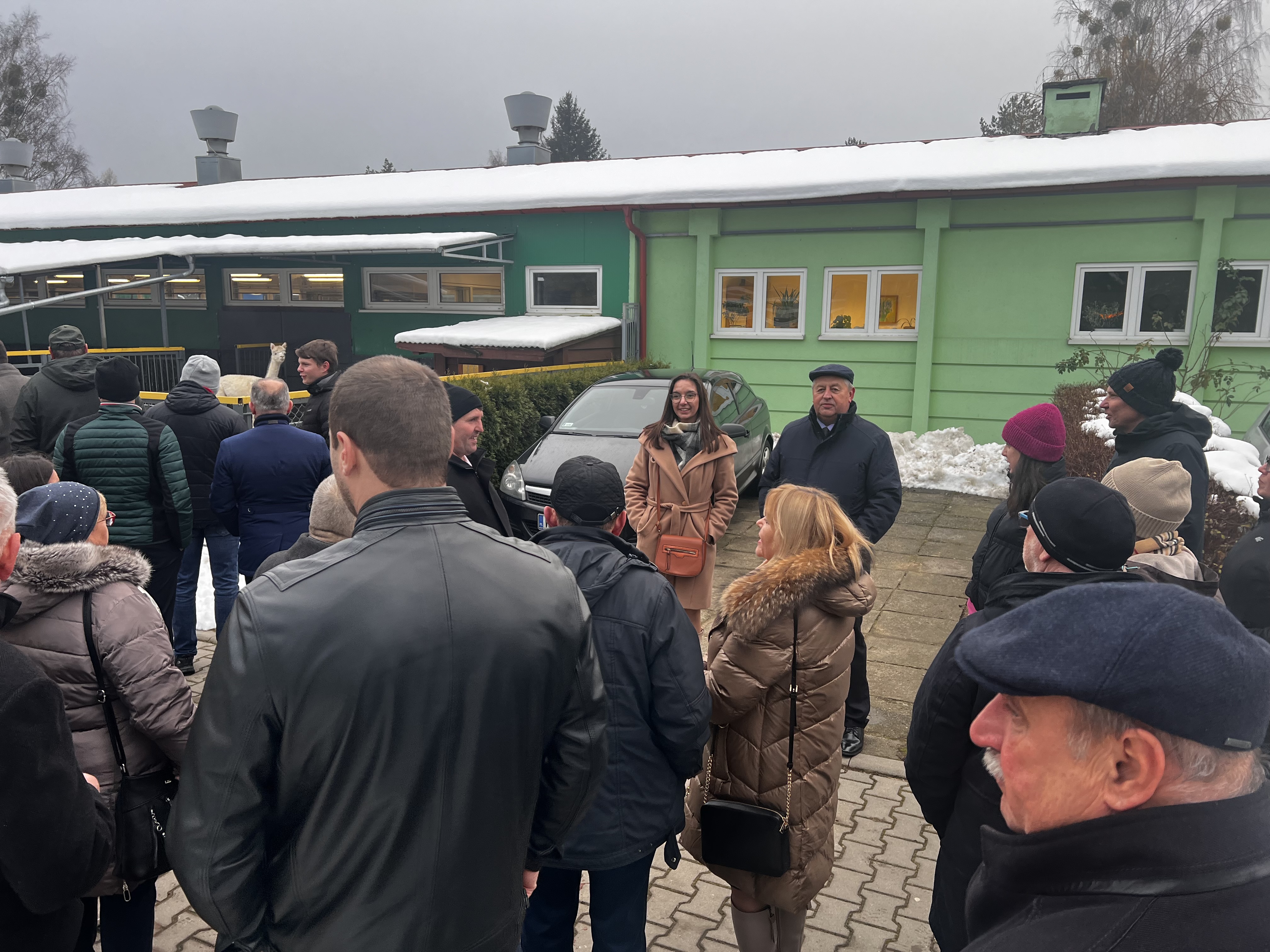
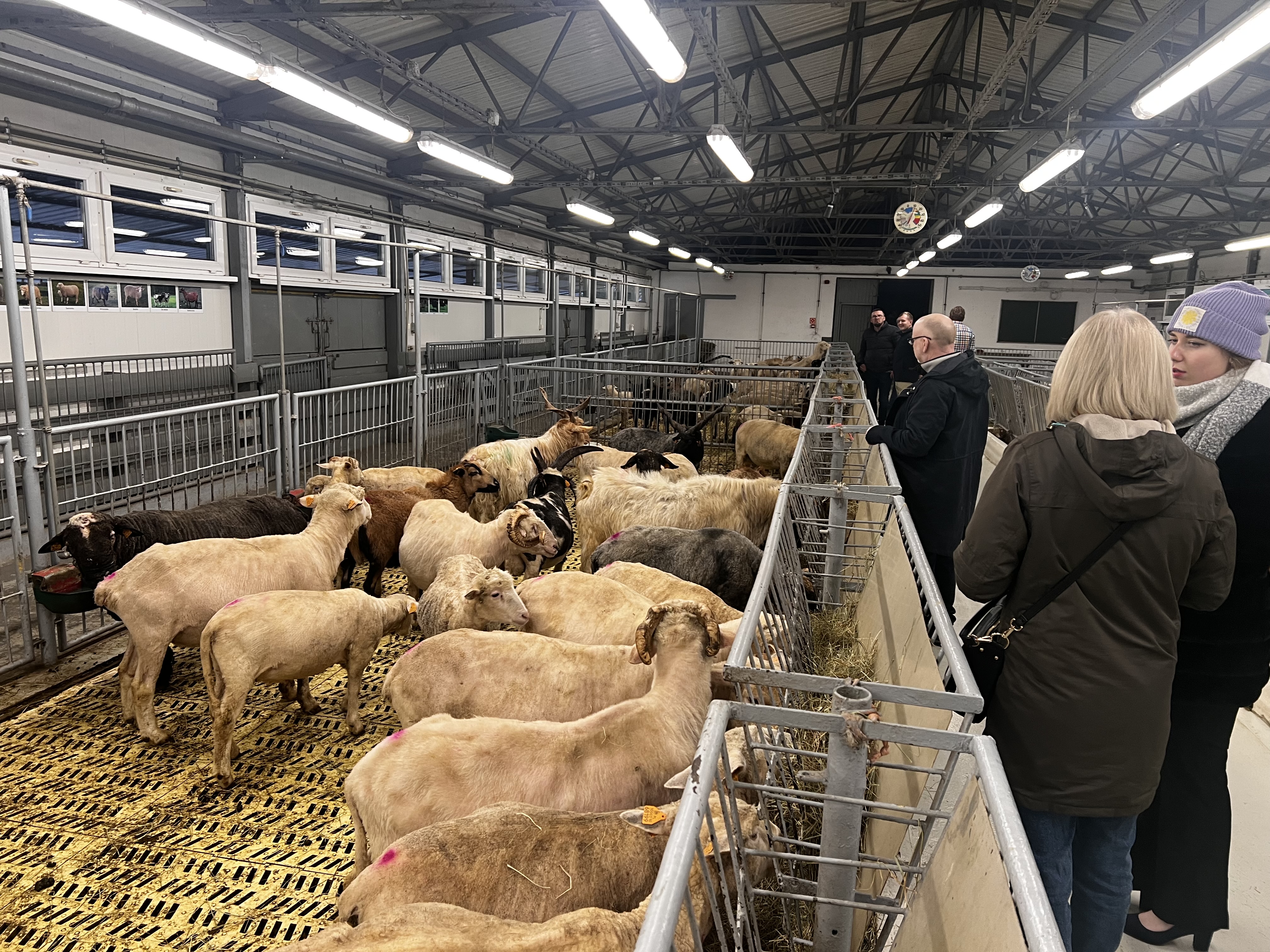
The next item on the agenda was a visit to the Department of Sheep and Goat Breeding at the University of Warmia and Mazury, which performs educational and scientific functions. Prof. Jan Miciński, PhD, and his staff presented the herd, which includes numerous breeds of sheep and goats as well as alpacas. During the visit, there was a demonstration of proper hoof trimming and a presentation of a collection of utility products and tools, as well as examples of the artistic use of wool.
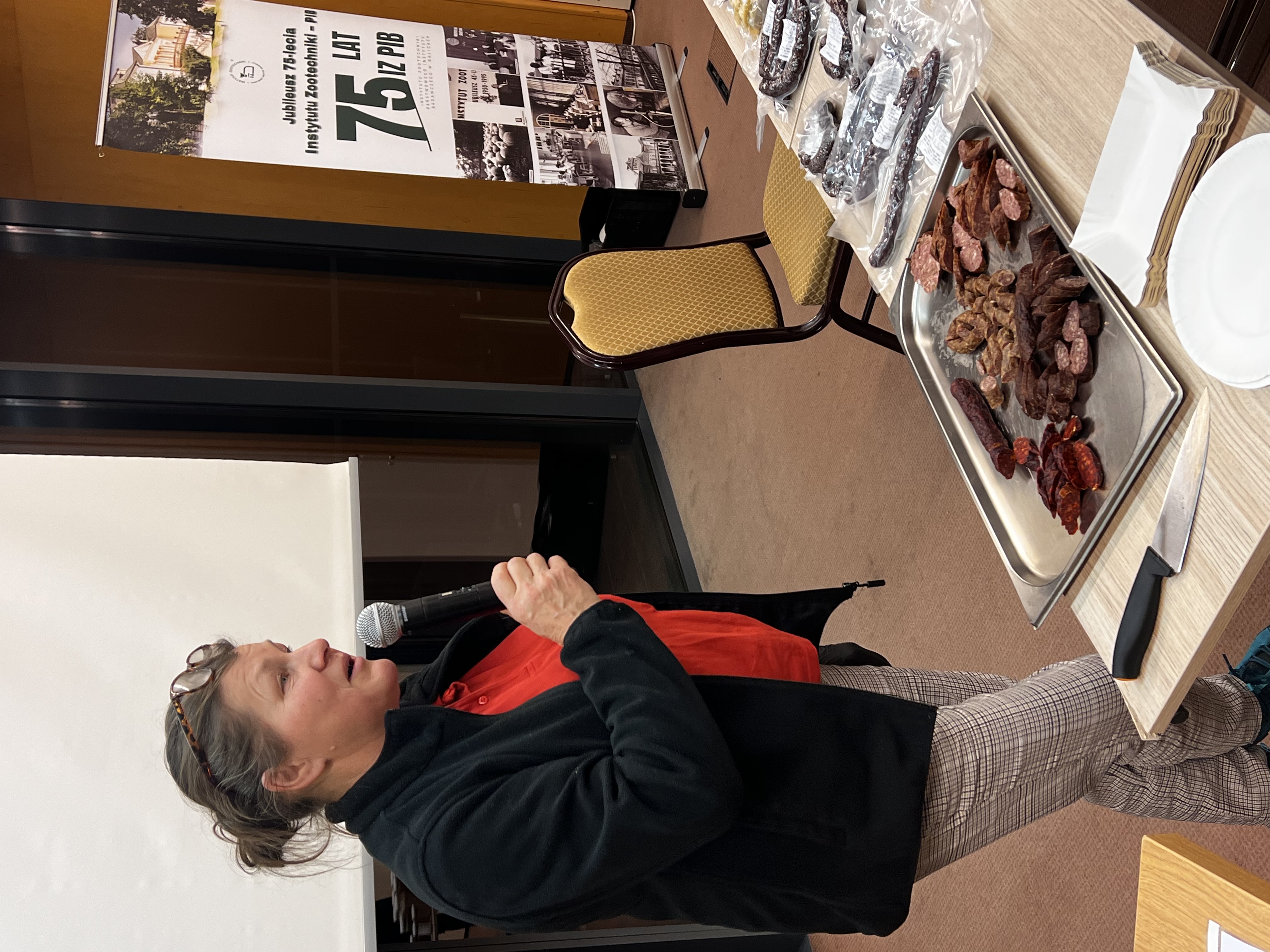
After returning, Barbara Niedziejko, a breeder of native sheep breeds from the Warmian-Masurian region, held a demonstration of Kamieniecka sheep and Black-headed meat sheep. She described her professional journey, from the purchase of her first animals to achieving economic stability, and presented the farm’s wide range of products, including raw sheep meat and mutton and lamb dishes. The presentation was followed by a tasting of the products.
The conference ended with a lively discussion during which participants shared their insights on sheep breeding.